
Facebook did physiological tests on users without their knowledge or explicit consent
Way to be creepy as shit, Facebook.
Facebook did physiological tests on users without their knowledge or explicit consent
Way to be creepy as shit, Facebook.
Over on Recode — oh, sorry…I mean Re/code — Uncle Walt posits that Apple is like a movie studio.
Studios release blockbuster franchise movies every few years, and then try to live off a series of sequels until the next big, successful franchise. We are in the early stages of one such project right now: On May 2, Columbia Pictures will release “The Amazing Spider-Man 2,” the first of what may be several sequels to the original 2012 film, that was itself a reboot of an earlier series.
Looked at in this way, your almost-new iPhone 5s and iPad Air are mere sequels, iterations of Apple blockbusters that rocked the world when they first appeared. The same goes for your MacBook Air, which has gone through many changes and improvements since Mr. Jobs theatrically slid it out of a manila envelope in 2008 to show how thin it was.
He uses the word “iteration” there but I think he confuses its meaning with the word “derivative.” Iteration implies methodical incremental improvement which, I think, any casual observer would see has been the case with the iPhone and iPad and pretty much everything Apple makes. Constant improvement. Sometimes not earth-shattering by themselves, but when taken in aggregate, adding up to a pretty big deal.
In contrast, Spider Man reboots are derivative. You are literally retelling the same story with minor changes around the edges which, in itself, is derivative of its comic book source material. It might be better or it might be worse. The only thing you can count on is it will be in some way different. But not. The goal isn’t to improve Spidey, only get you to see him again with another actor’s face (and, let’s be clear, to enable Sony to maintain their license to Marvel’s IP).
Movie sequels almost (almost) always do worse financially than their predecessors. Which Apple “sequel” has sold more poorly than the device it replaced? Also, with a few notable exceptions, qualitatively the originals are better, too (Empire Strikes Back and Godfather II being the most obvious examples I can think of). Movie sequels are often a crass attempt to pull more treasure from a productive hole. See Jaws 2, Poltergeist II, Matrix Reloaded, etc.
I also have to wonder what would qualify as a “game-changer” from Apple? Which game are we looking to change? From a financial aspect, there is no way for Apple to create something that generates the kind of revenue iPhone does. Not unless they branch out into oil production or auto manufacturing.
Apple is solely focused on making great products. Sometimes they change games, sometimes they “merely” make those games better to play. But they don’t make ill-conceived bullshit to give tech writers something to natter on about. Walt, of all people, should know better.
Facebook dropped its new iPhone newsreading app Paper yesterday and it’s getting universally positive reviews. And for good reason. It’s lovely. Some random things that have occurred to me as I’ve used it.
Paper seems to be a logical and natural step in the progression of Facebook. The site and its apps are more and more becoming how many people get their news and find things to see and read on the web (which is exactly what Facebook wants, of course). I don’t think this is just another way to view Facebook or is a “Flipboard killer.” It’s the future of the platform.
The New York Times Magazine is out with a piece documenting the development and unveiling of the original iPhone (coinciding, I presume, with the second anniversary of Steve Job’s death). I’d like to say that overall it’s a great piece, but I can’t since I had to stop reading it at the tenth paragraph. I suppose I’ll get back to finishing it after I write this post.
Up until the tenth paragraph (and the three that follow), it’s really awesome stuff. I totally get off on these behind-the-scenes kind of long reads, regardless of the company or product they’re covering. It’s fascinating to see how different companies and different personalities birth products. This account seemed just as compelling right before the author veered off into the land of unfounded popular opinion.
And yet Apple today is under siege.
Oh, god. Really? The most profitable electronics manufacture in the world? Under siege? Every company in the civilized world would like to be as under siege as Apple.
From the moment in late 2007 that Google unveiled Android — and its own plan to dominate the world of mobile phones and other mobile devices — Google hasn’t just tried to compete with the iPhone; it has succeeded in competing with the iPhone.
Just because another company has found a way to compete in the same marketplace doesn’t mean you’re “under siege.” Is Ford under siege by Toyota? Or McDonald’s by Wendy’s? Last I heard, they’re all doing well. But not as well as Apple, the assumed siege victim here. Why must Apple have north of a 70% marketshare to be deemed as succeeding? What other company is held to this standard?
Android has exploded in popularity since it took hold in 2010. Its share of the global smartphone market is approaching 80 percent, while Apple’s has fallen below 20 percent.
Which means nothing, really. Note that Google makes more money from their apps and services on iOS than they do on their own platform. Note that, in fact, the company that’s really found a way to compete with Apple is not Google as much as it’s Samsung. And when I say “compete” I mean “mindlessly copy.” But whatever. It works for them. They and Apple are literally making all the money in the smartphone marketplace.
The better comparison for Apple is the often-made example of BMW. Tiny marketshare; Lots of mindshare and profits. Companies that make premium products are not often (if ever) the ones that make the most of those kinds of products.
A similar trend is under way with iPads: in 2010 the iPad had about 90 percent of the tablet market; now more than 60 percent of the tablets sold run Android.
How many Android tablets do you see in the wild compared to iPads? I know they’re selling a lot of these things, but to whom? Where are they being used? Are they basically zero margin, low-end products? Or, as in the case of Amazon’s Kindles, just low-margin storefronts? Remember, Apple doesn’t work for marketshare. They work for profit share. In that regard, they’re killing it.
What worries Apple fans most of all is not knowing where the company is headed.
This “fan” didn’t know where they were headed under Jobs, either.
When Jobs died in October 2011, the prevailing question wasn’t whether Tim Cook could succeed him, but whether anyone could. When Jobs ran Apple, the company was an innovation machine, churning out revolutionary products every three to five years. He told his biographer, Walter Isaacson, that he had another breakthrough coming — a revolution in TV. But under Cook, nothing has materialized, and the lack of confidence among investors is palpable.
The presumption regarding the TV product is that the content owners can’t figure out terms that would let Apple have access to their shows that Apple wouldn’t be a fool to accept. These are the insightful and innovative head cases like those running CBS and Comcast. Having a platform that works is not the same as having a product absent the content it needs to be relevant. Unlike other companies, Apple doesn’t release half-baked concepts into the marketplace and expect people to buy them.
With regard to investors, I’d suggest they never understood why Apple was successful in the first place, so I wouldn’t read too much into their confidence issues now. Except that I have a substantial (for me) position in AAPL, of course.
Apple product announcements used to routinely send its stock soaring.
That’s just totally false. In fact, it’s quite the opposite. Expectations have, since the iMac’s introduction, always been totally unrealistic. When they don’t announce anti-gravity solar-powered bread slicing iPods, the stock slides. Every time.
When Cook presented the latest smartphones in September, the iPhone 5c and the iPhone 5s, Apple’s stock fell 10 percent.
Right. Like I said…
A year ago the company’s stock price was at $702 a share, making Apple the world’s most valuable corporation. Today, it’s down more than 25 percent from that peak.
Keep in mind the stock went up to $702 under Tim Cook’s watch, not Jobs’.
Comparing anyone with Steve Jobs is unfair.
Of course it is, but you’ll do it anyway.
To me, this little foray into the land of crappy insights and apparent inability to fact-check (i.e., use Google) reads like an editor falling into a kind of false equivalency trap. The story was perhaps too positive toward the company or Jobs. It didn’t fit the lazy media narrative regarding Apple. These couple of paragraphs read like a last minute, ham-handed insertion to “toughen up” the piece. Too bad. It makes me question the accuracy of everything that follows.
The NYTimes this morning has a piece on the assumed fall of Blackberry. A few snippets…
It is an unforgiving law of modern business: adapt or die.
Make that: adapt fast — or die even faster.
And…
The abrupt decline of BlackBerry illustrates how consumers and investors demand almost instant change these days, especially from tech companies.
Let’s not forget that Blackberry initially dismissed the touch interface as something business users wouldn’t want. But, even though, they kicked out the Blackberry Storm in late 2008, just about a year after the first iPhone. That, I think is pretty fast considering nobody had a phone with only a touch interface (with any kind of adoption) before the iPhone came along and changed everything in 2007.
The issue with Blackberry wasn’t that they were too slow. It’s that the Storm sucked. Hard. The thing that’s more important than being fast is not being shitty.
Gruber quotes from a Wall Street Journal story:
Apple routinely tests various designs and has been known to make changes late in the design process, so it isn’t clear whether the proposed new product will make its way to market. However, an iPad Mini with a retina display appears more likely, particularly after Google Inc. released its latest Nexus 7 tablet last week with a high-resolution screen.
And then points out in commentary on the WSJ’s review of the new Nexus 7 and it’s sub-par battery life and the aforementioned rumor of a Retina iPad mini:
We demand magic — a retina iPad Mini with no decrease in battery life, but no increase in thickness, weight, or price. And they need to produce at least 20 million of them by Christmas.
Right. And if Apple chooses price, size, weight, and battery over screen resolution (an increase of which would undoubtedly cause one of those other attributes to suffer), the punditry will rise up and eviscerate Apple and its failure to “innovate.”
My gut says this fall is too soon to expect a Retina iPad mini.
“Samsung is now more profitable than Apple, according to second-quarter financial results released by Samsung on Friday in Seoul.”
From the New York Times, apparently forgetting or not caring that Samsung makes a few other things besides phones (like televisions and boats) and thinking a comparison of Apple’s earnings and Samsung’s is somehow relevant.
Uncle Walter has reviewed a new thing called the “Eee Pad Transformer Prime”. In his review, he said:
Asus and Nvidia build in three battery modes, and I tested only the one called Normal. Unfortunately, Nvidia now says that nomenclature is misleading, and that Normal is really meant for only high-performance tasks. So, early next year, when it switches to the next version of Android, it plans to rename Normal as “Performance,” to steer users to a less power-hungry mode called “Balanced.” I can’t say how the Prime’s battery will perform in that scenario with the new OS.
Ben Brooks asked:
Why ship the tablet with a battery mode mislabeled?
A better question might be, why ship a tablet with a battery mode?
The Foursquare special at my local AT&T store.

I’ve seen many, many comparisons of Steve Jobs to the likes of Henry Ford and Thomas Edison in the past few days, but only one so far to the guy I think he most closely resembles in American life: Walt Disney.
Surely, Ford was an innovator as was Jobs. Edison was an inventor as, in a different way perhaps, was Jobs. But neither of those men, with their impressive catalog of achievements, had the same kind of emotional connection that Jobs seems to have had with the world. Facebook on Wednesday night was like one big Steve Jobs tribute site. People I never would have expected to were posting their reminiscences about their first Apple products or how Steve’s aesthetic impacted their lives, both professionally and otherwise. You have to go back to 1966 to see a moment where the death of a business leader had the same kind of impact.
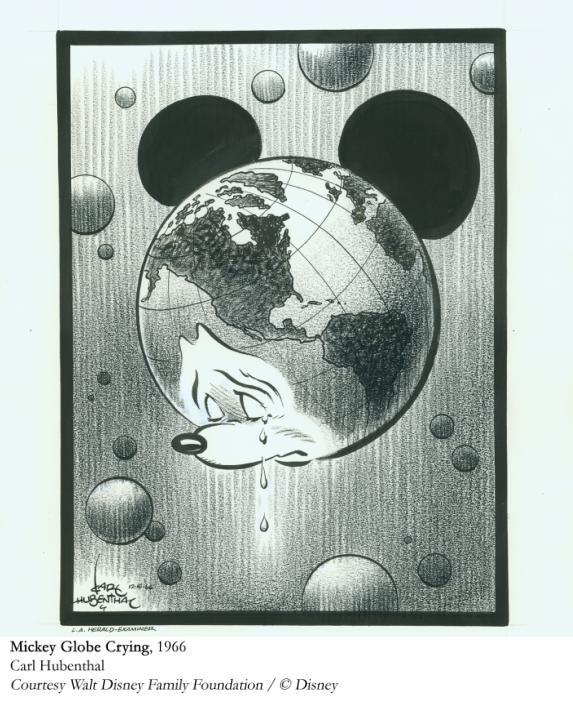 Both Walt and Steve (besides being known worldwide by their first names) were the embodiment of the companies they founded. They were equal parts celebrity, business leader, and inspirational innovators. Walt turned our perception of animated film on its head and advanced the art, both technically and artistically, more than any other person before or since (though John Lassiter is giving him a run for his money). He turned his enthusiasm and attention to detail to motions pictures, television, theme parks, and even urban planning and revolutionized them all. He would have fit perfectly into Apple’s “Think Different” campaign had his likeness not been locked in a steel vault under the Matterhorn. Steve of course “ignited the personal computer revolution” (as the Apple press releases always say), and radically impacted the entire entertainment business, from music to movies to gaming. His devices made possible the explosive rise of such diverse interests as social media, photography, and even filmmaking, from guys in their bedrooms to guys like Peter Jackson. His influence on design and manufacturing will be felt for a decade, at least. The mobile device industry is nothing at all like what is was only four years ago. All because of Steve’s vision.
Both Disney and Jobs pushed to create idealized realities. Steve’s very much in the present through a fanatic attention towards experience design, both virtual and physical, and Walt by representing both the past and the future as how he’d like them to be rather than how they were or would be. Their visions, based solely on their own internal ideals, were wholeheartedly embraced by millions. We not only loved what they created, we loved how they saw us in their creations.
They’re very different in what they left behind, however. When Disney died, he left a company that couldn’t replace him. Not only was there no heir, there was no interest in finding one. They went along for years thinking “what would Walt do?” and ended up nearly being consumed in the process until another leader came along and (for good or ill) started to create a new vision for Walt’s company. Steve, however, has done much to leave Apple in the best possible spot it could be. All the assets that make Apple great are still there. He even oversaw the creation of an internal Apple University to distill the qualities he led with and to ensure they’re passed on to others. Where the Walt Disney Company wandered and became diminished in the years following Walt’s death, Apple seems poised to continue its remarkable ascension specifically because of its founder’s vision and commitment.
Walt always acted like his company was there to enable him to follow his passions. In the case of Jobs, Apple was his passion. His single greatest creation. And that will make all the difference in the world.
 Moon Burrito
You must be logged in to post a comment.